Trail Kinetix · Trail Dynamics System
flow follows form
Every trail sits inside a bigger system than the one you build. Water, terrain, riders and time all act on it, and every stage of the work has to account for that: planning, design, construction and maintenance. It's why we hold that flow follows form. Always.
The Trail Dynamics System (TDS) is our response to that belief. It's TrailKinetix's proprietary methodology for designing, analysing and refining trails as complete dynamic systems, integrating rider dynamics, bike physics, terrain and hydrology into one evidence-based process that creates trails which ride better, last longer and need less maintenance.
80%
Of trail damage
is water-related
3×
Fewer rebuilds
on flow-optimised trails
01
Systems check
before you break ground
Every trail sits within a system and
carries two interacting flow states.
Water
Water
A trail does two things to water at once. It intercepts what's already moving across the hillside, and because it's compacted and continuous, it concentrates flow of its own. The trail isn't just crossing the catchment system. It's part of it.
Outslope, grade reversals, and drains all start at the trail. The water doesn't. What arrives at any point on the trail is decided further up the hill. The volume, the speed, and the direction are all set by catchments and flow paths that existed before the trail did. Above the trail alignment, the failure pattern is visible before the first storm: sections that will drain, and sections that will take the damage.
Rider
Riders load the trail. Every corner, compression, and landing drives force into the surface. The build decides where that force lands. Timing and rhythm carry speed from one feature to the next, and where the shapes earn confidence, riders flow and the load meets ground built to take it.
Where they don't, riders brake. The same patch takes the hit, run after run, until it cups and braking bumps form. Flow drops, lines shift, and the wear follows them. The result: sections that ride, and sections that fight back.
Water
A trail does two things to water at once. It intercepts what's already moving across the hillside, and because it's compacted and continuous, it concentrates flow of its own. The trail isn't just crossing the catchment system. It's part of it.
Outslope, grade reversals, and drains all start at the trail. The water doesn't. What arrives at any point on the trail is decided further up the hill. The volume, the speed, and the direction are all set by catchments and flow paths that existed before the trail did. Above the trail alignment, the failure pattern is visible before the first storm: sections that will drain, and sections that will take the damage.
Rider
Riders load the trail. Every corner, compression, and landing drives force into the surface. The build decides where that force lands. Timing and rhythm carry speed from one feature to the next, and where the shapes earn confidence, riders flow and the load meets ground built to take it.
Where they don't, riders brake. The same patch takes the hit, run after run, until it cups and braking bumps form. Flow drops, lines shift, and the wear follows them. The result: sections that ride, and sections that fight back.
Flow Follows Form is more than our tagline.
The shape of a trail determines how riders move through it, how water behaves during rainfall, and how the trail performs over its lifetime.
The Trail Dynamics System is how we engineer that shape.
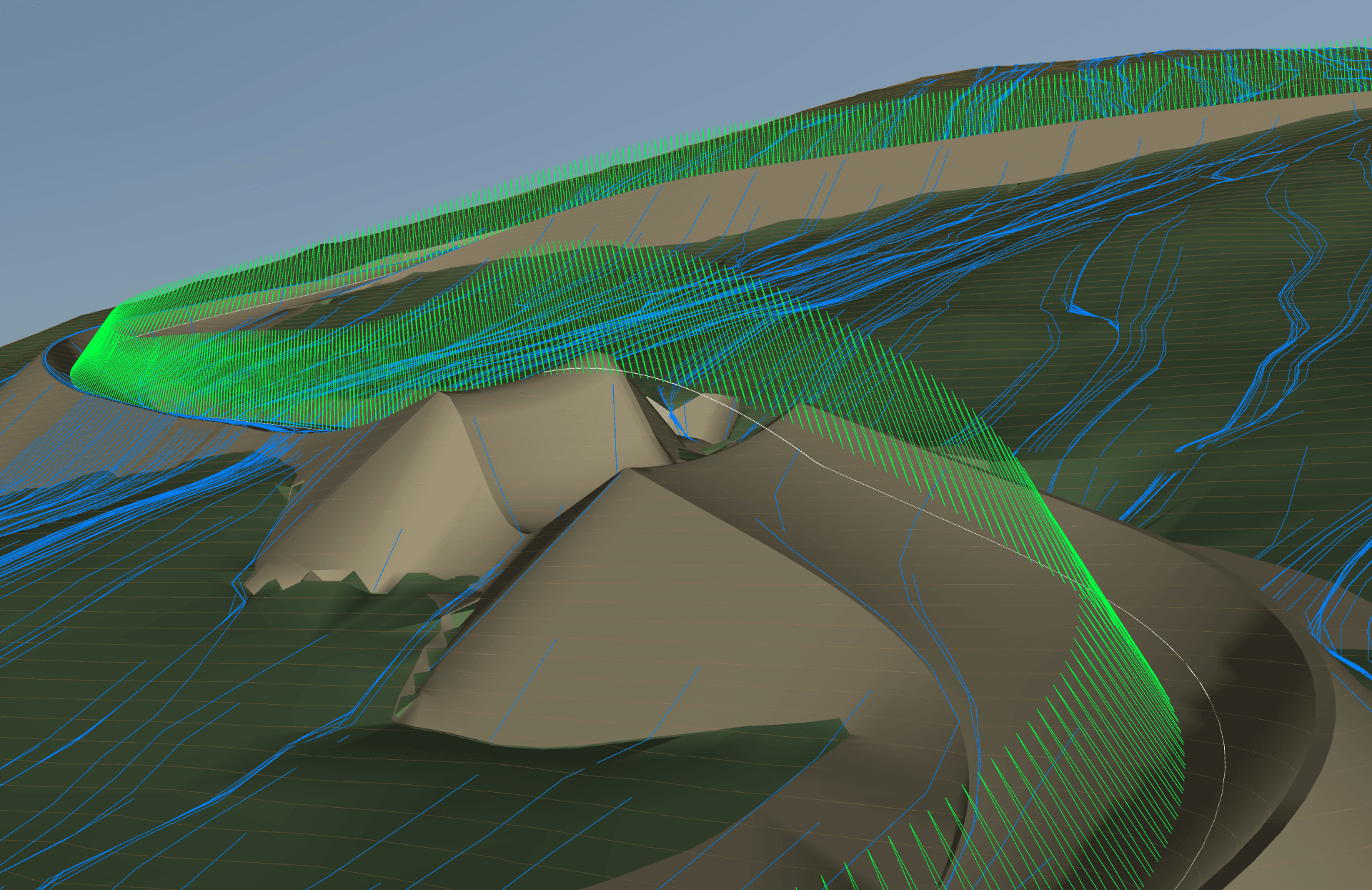
One connected process
Rider dynamics, bike physics, terrain and hydrology — analysed together.
Rather than treating alignment, features, rider flow and drainage as separate disciplines, TDS brings them together into a single connected process, creating trails that feel intuitive, hold momentum and perform as one system.
Great flow isn’t created by individual features. It emerges from the precise relationship between speed, spacing, timing and terrain.
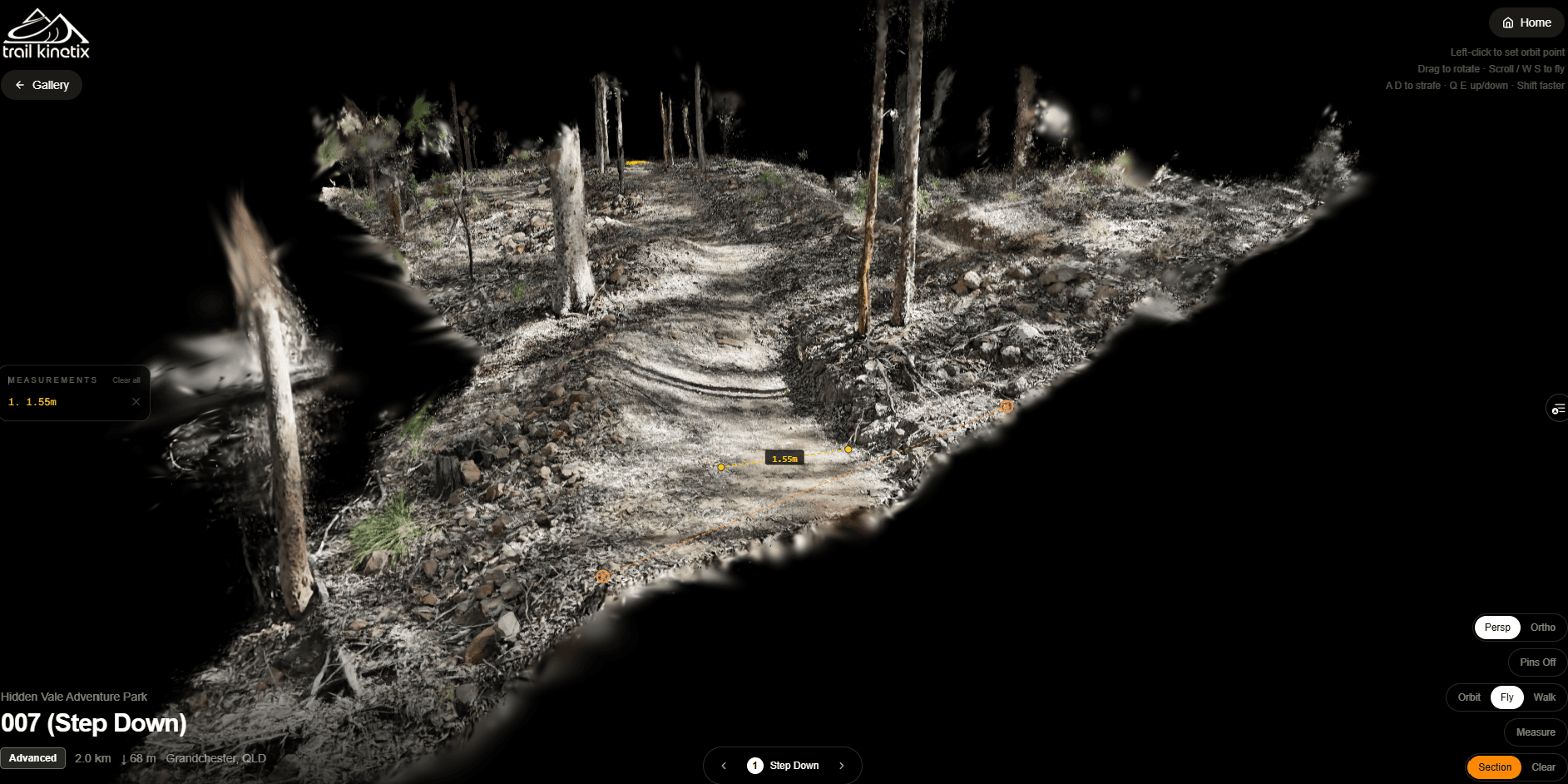
Every stage, same philosophy
From early concept through construction and long-term optimisation.
Every design decision feeds the next:
- 01Terrain analysis
- 02Rider flow engineering
- 03Hydrology assessment
- 04Trail performance modelling
- 05Alignment optimisation

On the ground
Great trail design doesn’t happen solely behind a computer.
Understanding a site takes time on the ground — walking the terrain, reading the landscape and working alongside trail builders as the project evolves.
Trail construction is iterative. Alignments often shift as new opportunities or constraints emerge. TDS is built to adapt, holding the original design intent while responding to what the site reveals.
Trail Kinetix · The Result
Rider flow and water flow, working together rather than competing.
Smoother riding.
Less erosion.
Lower maintenance.
A trail that holds its intended character as it ages. Because when form is engineered with purpose, flow follows.